




Try Eddy
Play overview video

The right role, the right steps. Every single time.

A platform to design, run and improve the processes that hold your organization together.

Do you recognise these?

The Dead Doc

The procedure was written once. Now the team works from memory and messages. The documented process and the real process quietly diverge.

The Broken Handoff

Work moves forward, but the reasoning stays behind. The next person pieces it together from loose threads and half-remembered conversations.

The Blind Spot

Something is slow, but nobody can point to where. Was it the approval that took three days, or the two weeks it sat in someone's inbox?

The Status Scramble

You shouldn't need a meeting to know what stage things are at. But without shared steps, the time spent tracking the work starts to rival the time spent doing it.

Every organisation has people who hold things together: the ones who know what step comes next, who chase the right person at the right time, and who carry the context that keeps a process moving. This coordination work is real and essential. But it doesn't scale, isn't captured anywhere, and comes at the cost of the higher-value work those same people could be doing instead.

Turn how you workinto something that works.

Define how work gets done. Run it. Capture the data automatically. Every step is assigned, every decision is traceable, every outcome is stored.

If it involves people coordinating in sequence, Eddy makes it repeatable, transparent, and accountable.

How Eddy Works

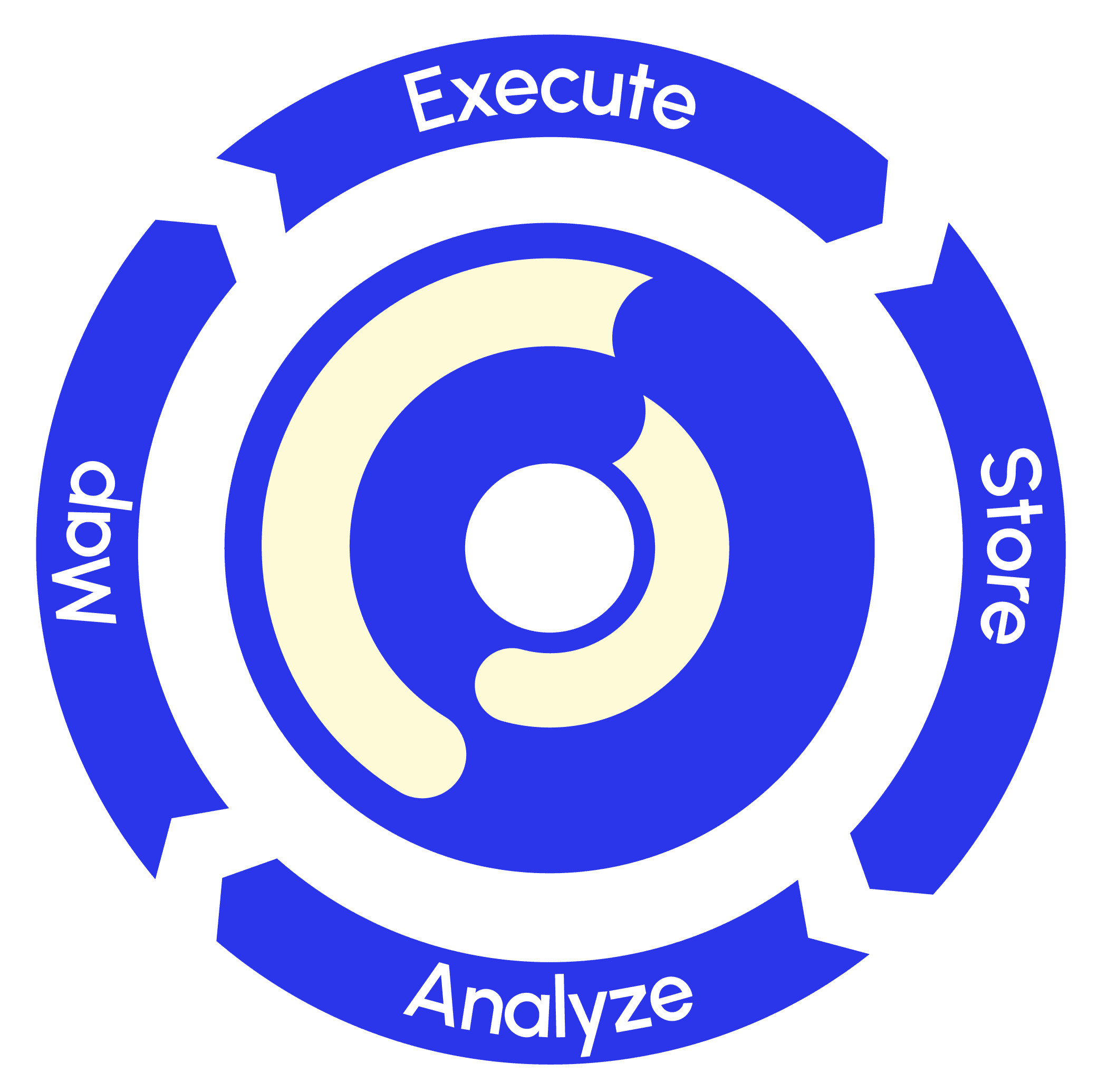
Eddy wheel: Map, Execute, Store, and Analyze

Map

01. The process gap

Your process exists. It's trapped in emails, memory, and assumption.

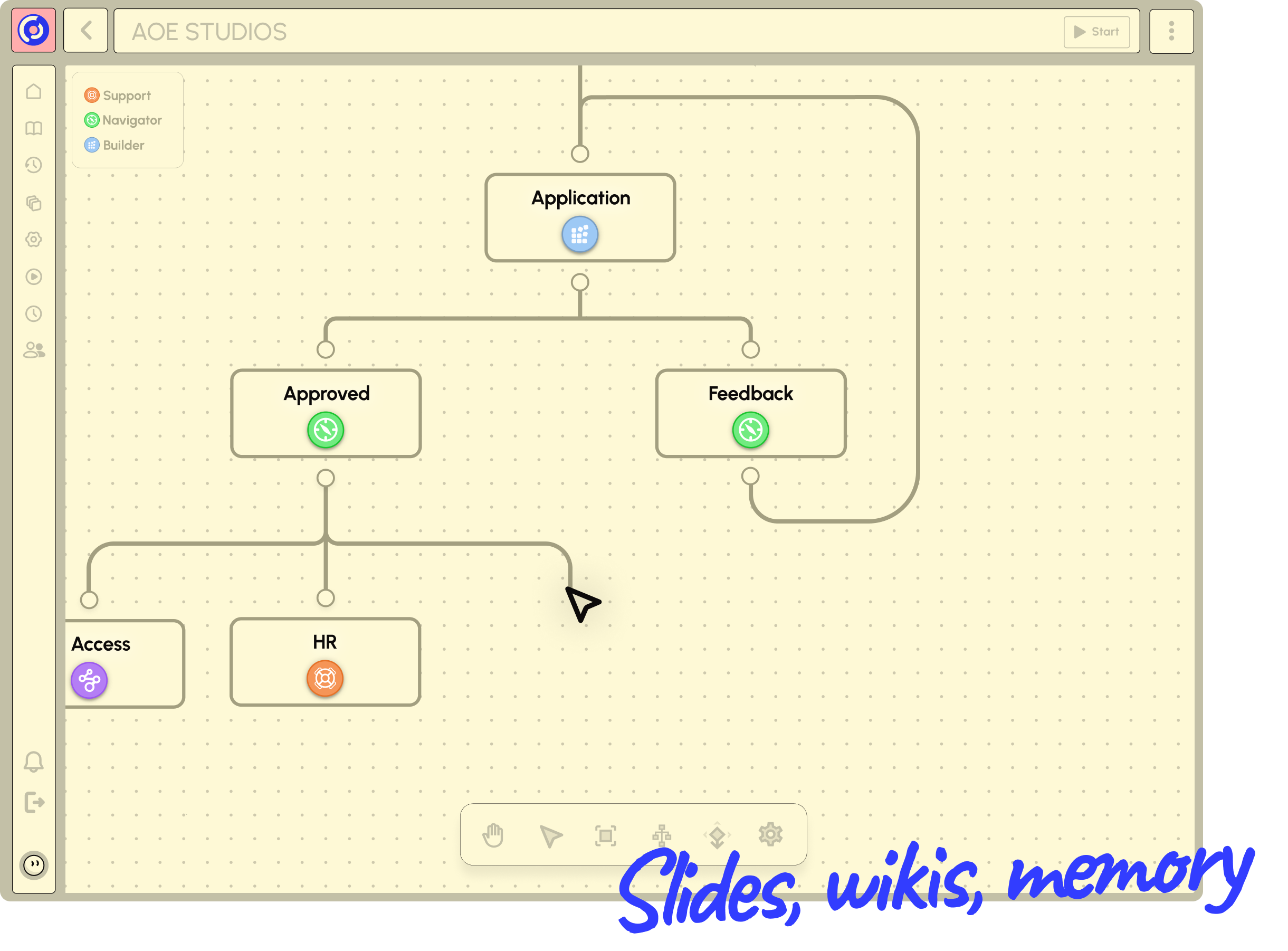
Every organisation has processes: approval chains, onboarding steps, compliance routines. But they live in slides nobody updates, wiki pages nobody reads, and the heads of people who might leave tomorrow. The process is real. The problem is nobody can see it, share it, or prove it ran correctly.

01. The living map

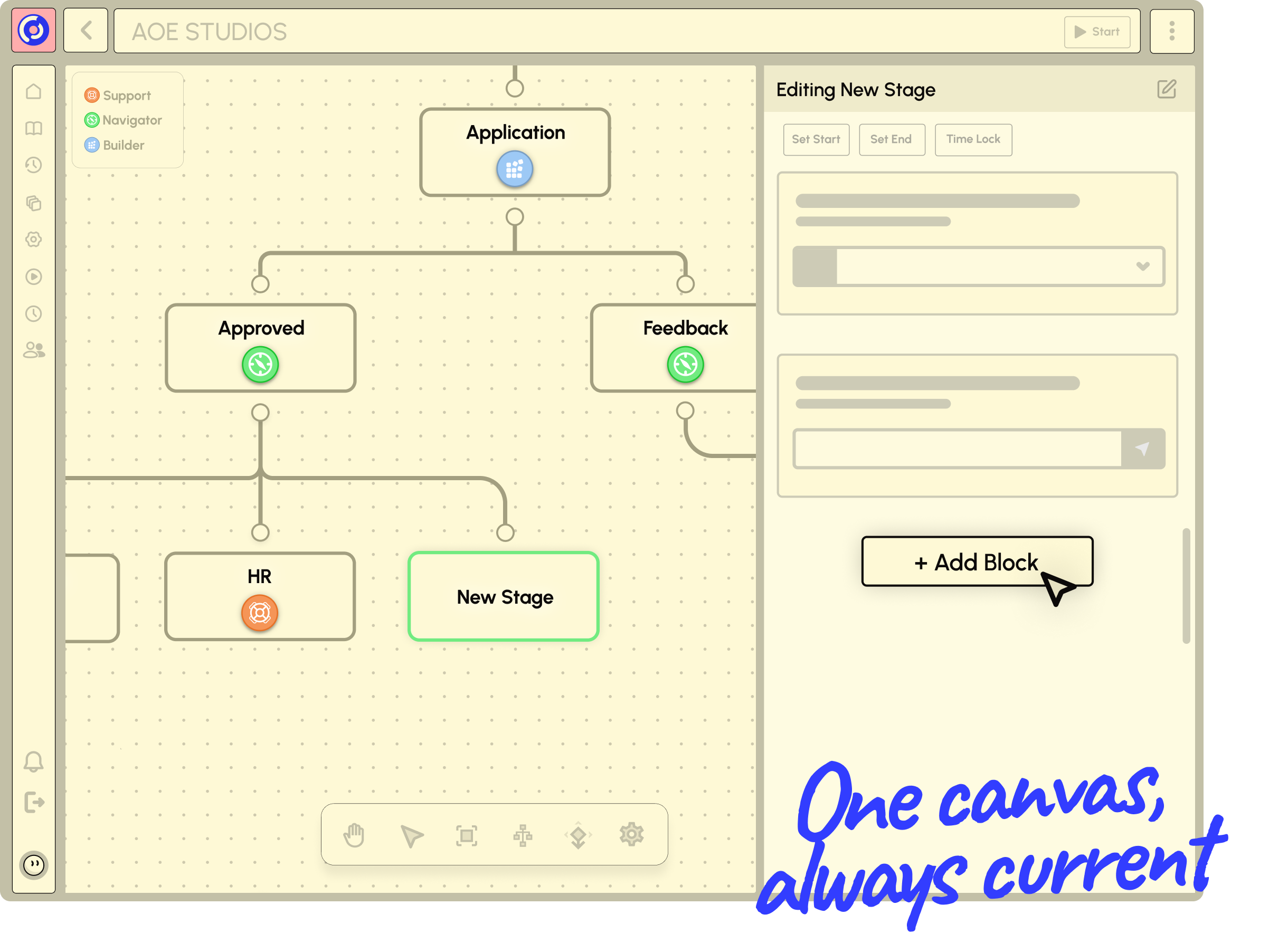
The map you draw is the process people run

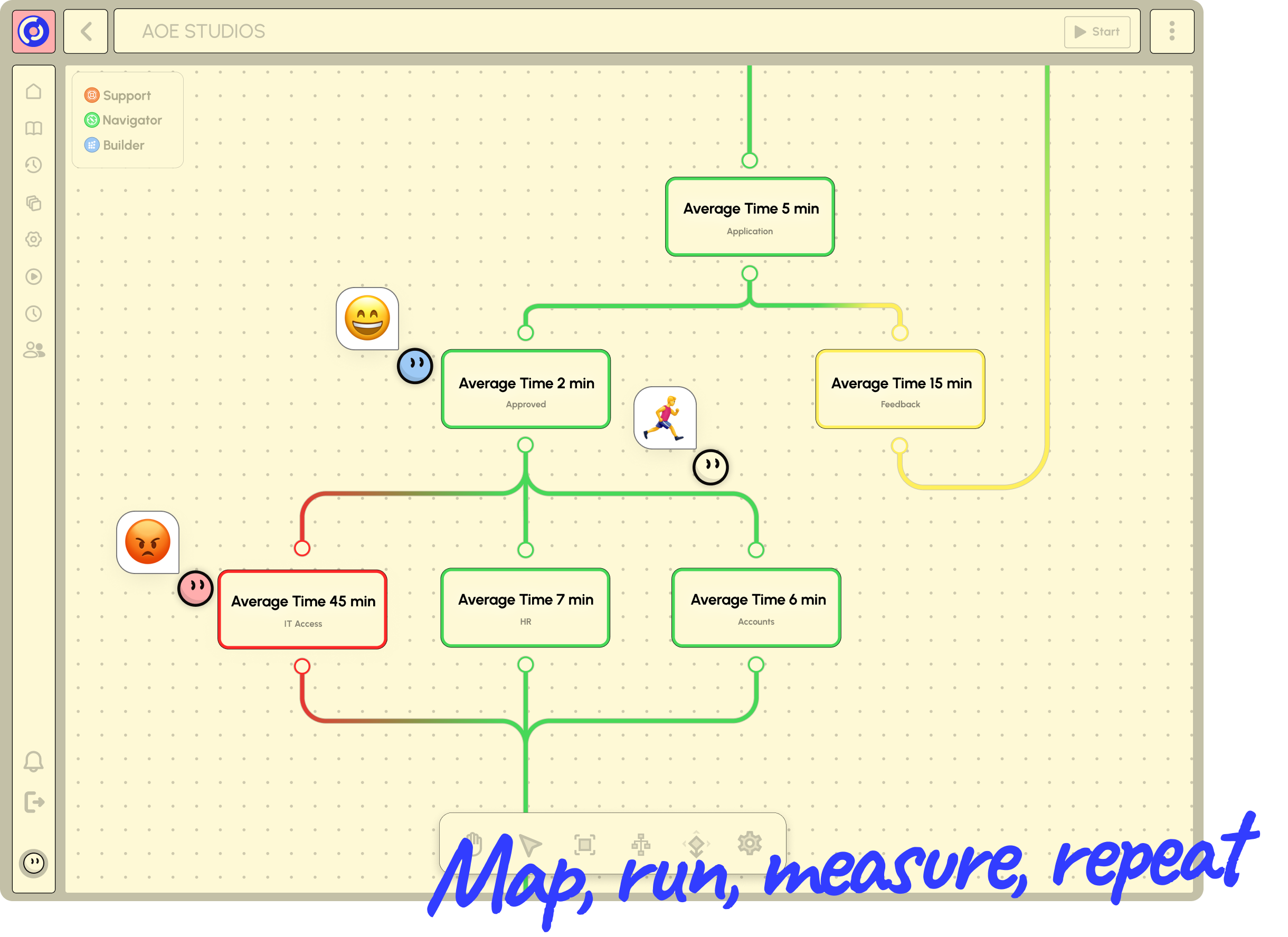
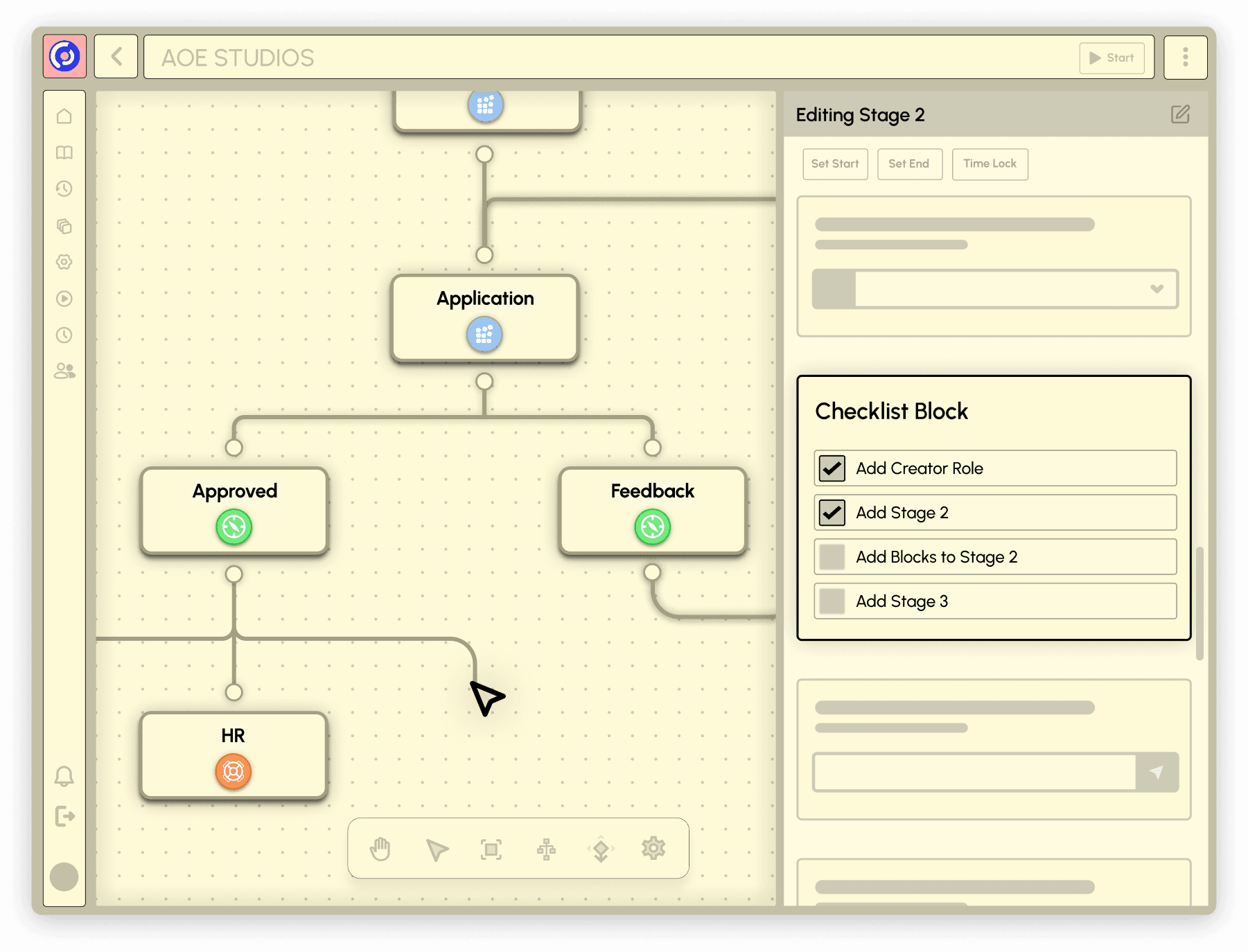
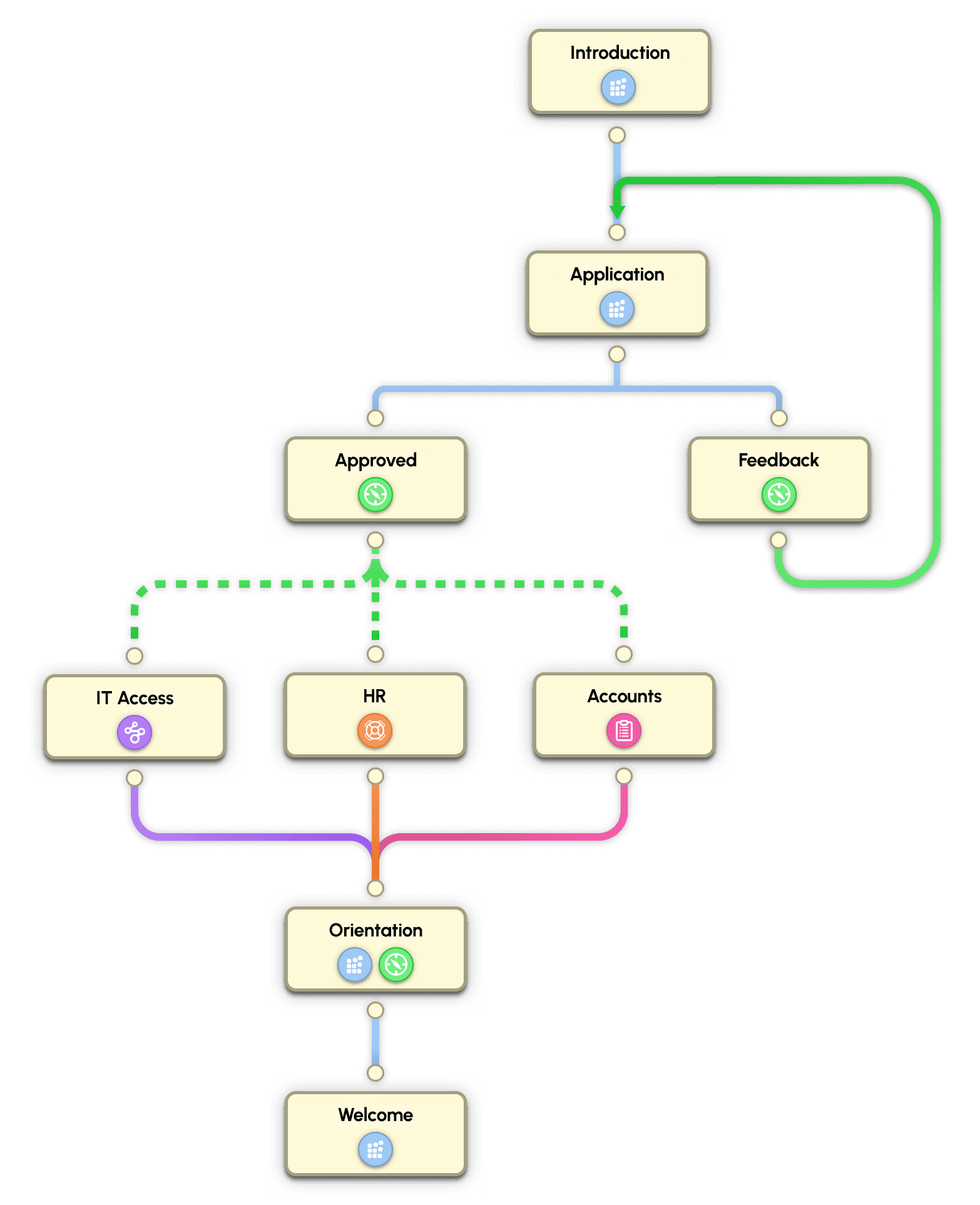
Eddy's visual builder turns tacit process knowledge into a shared, executable graph. Stages, roles, conditions, and handoff paths are all visible on a single canvas. Mapping makes responsibilities visible and exposes ambiguity before the process runs. Because the map IS what people run, it never drifts from reality. Change the map, and the next run follows the new version.

Execute

02. The coordination tax

Every handoff is a chance for work to stall, drift, or get lost

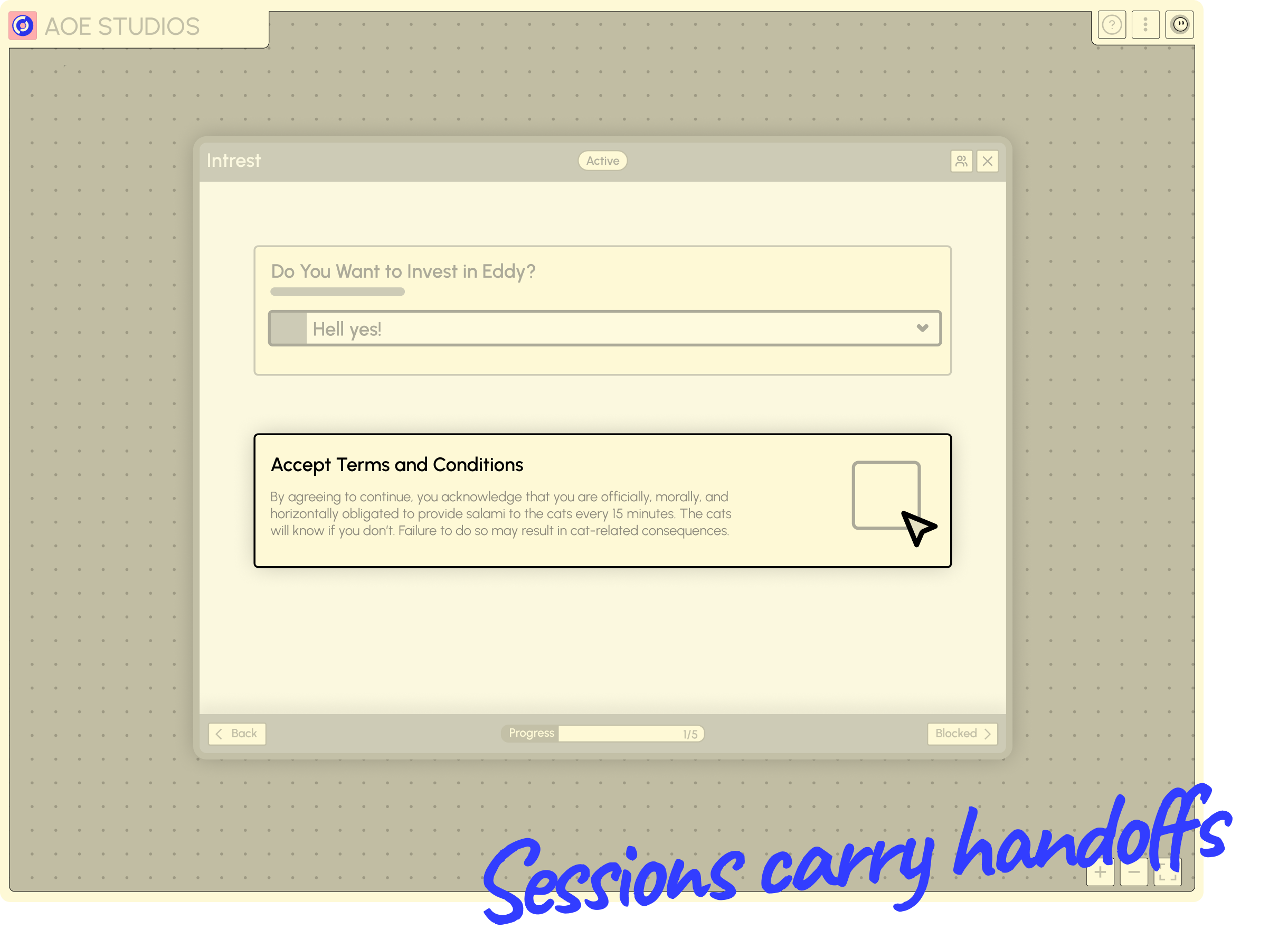
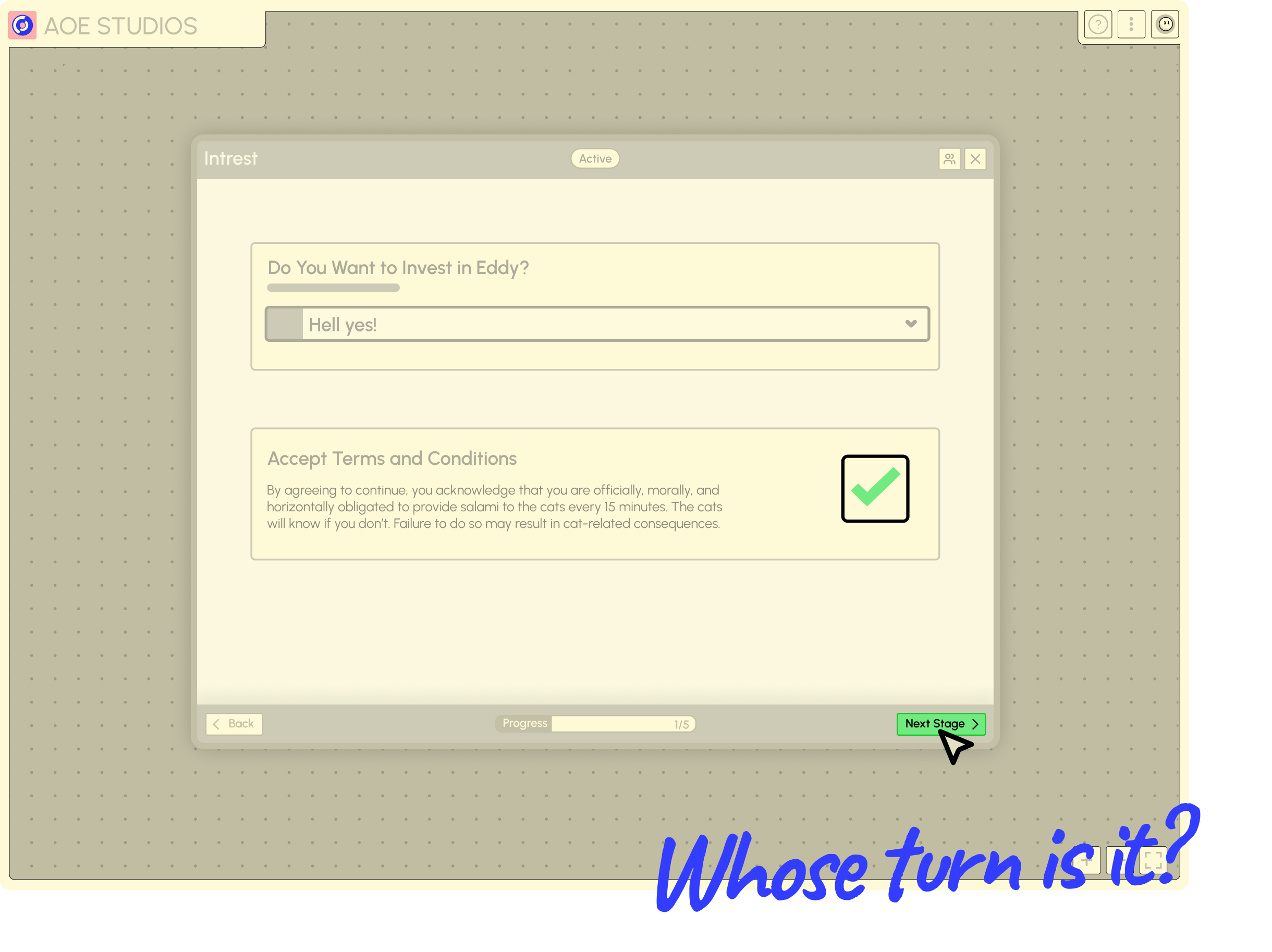
Someone finishes their part. Now what? They email the next person, hope they see it, hope they have context, hope they know what "done" looks like. Each handoff between people is a gap where work gets stuck, details get lost, and nobody's quite sure whose turn it is.

02. One link, one step

Click a link, land on your stage, and the system handles the rest

A session is the live version of the map. Participants enter from a single link, see exactly what's needed from them, and complete their step. When they're done, the next person is notified and assigned automatically. The full process stays visible; everyone can see where the work is and where it's going.

Store

03. The reporting scramble

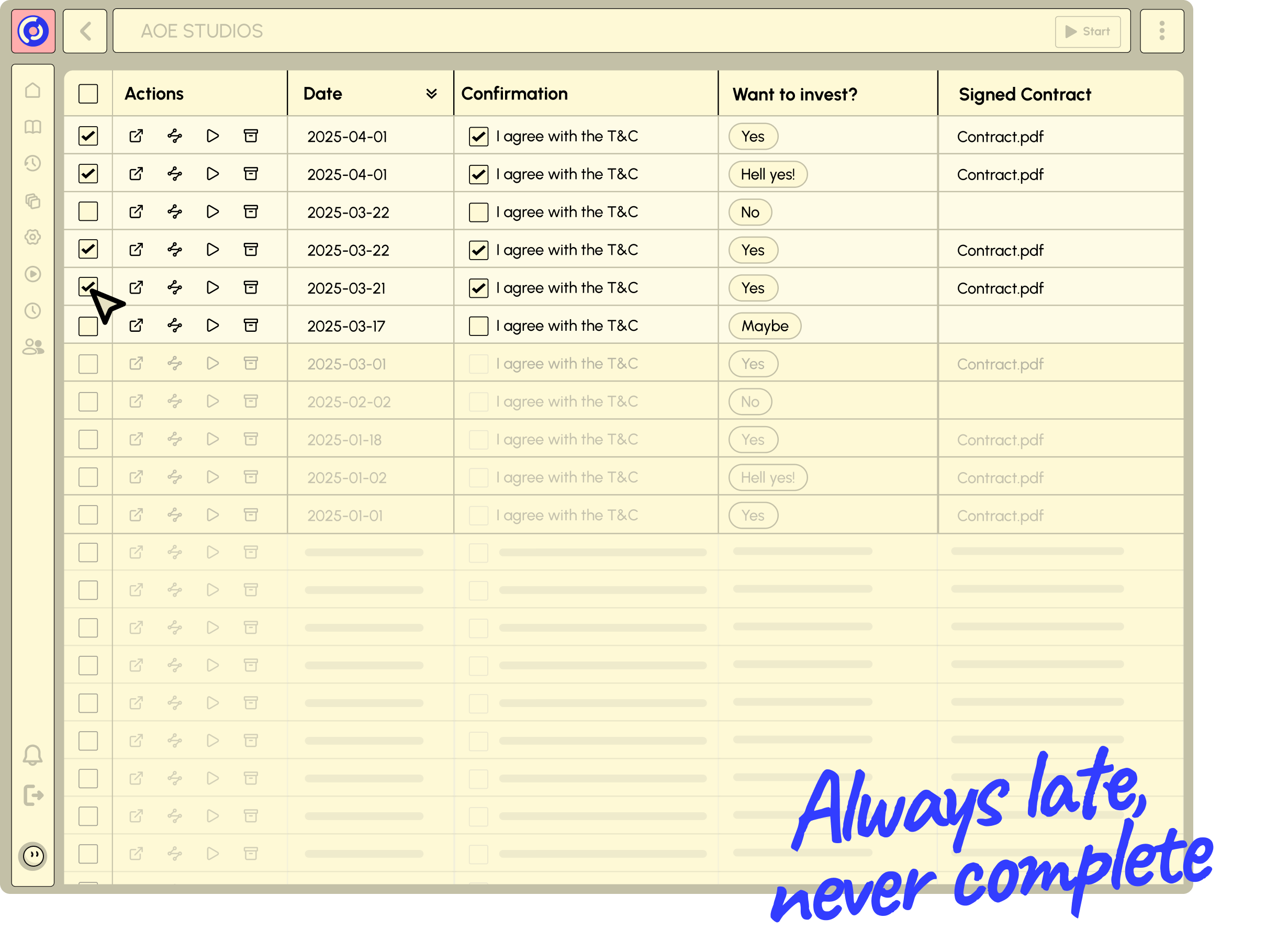
Recording what happened shouldn't be a second job

Most organisations reconstruct process records after the fact: pulling data from emails, chasing sign-offs, copying answers into spreadsheets. The result is incomplete, inconsistent, and always late. The work gets done, but the evidence of how it got done is someone else's problem.

03. The record writes itself

Every answer and decision is captured as people work

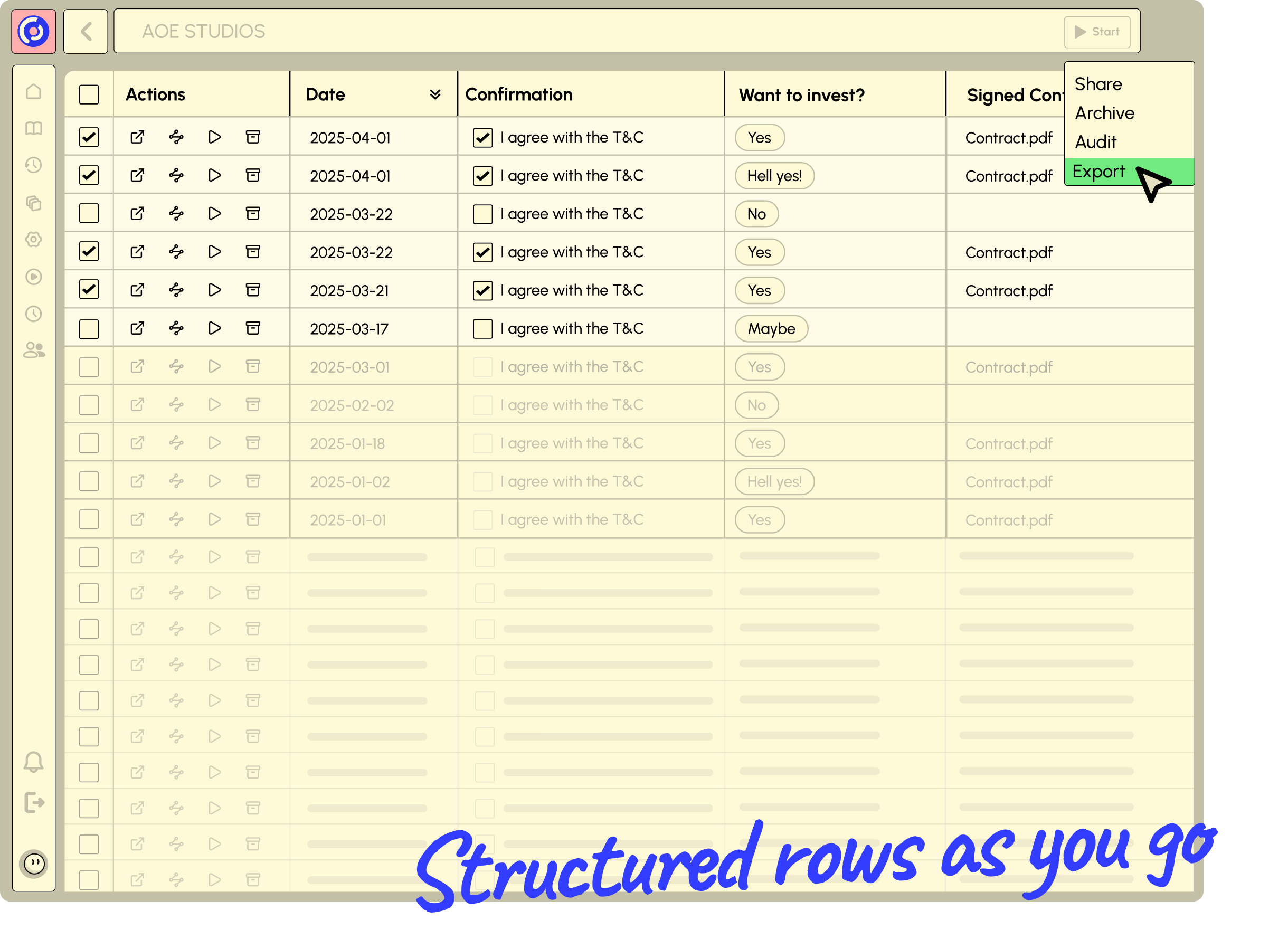
Each form field maps to a column in a structured sheet. As people complete their steps, their inputs become clean data rows automatically: no second admin phase, no reconstruction. File attachments, decisions, the path the work took, and how long each handoff lasted are all stored with the record.

Analyze

04. The guessing game

You can't improve what you can't measure. Most processes aren't measured.

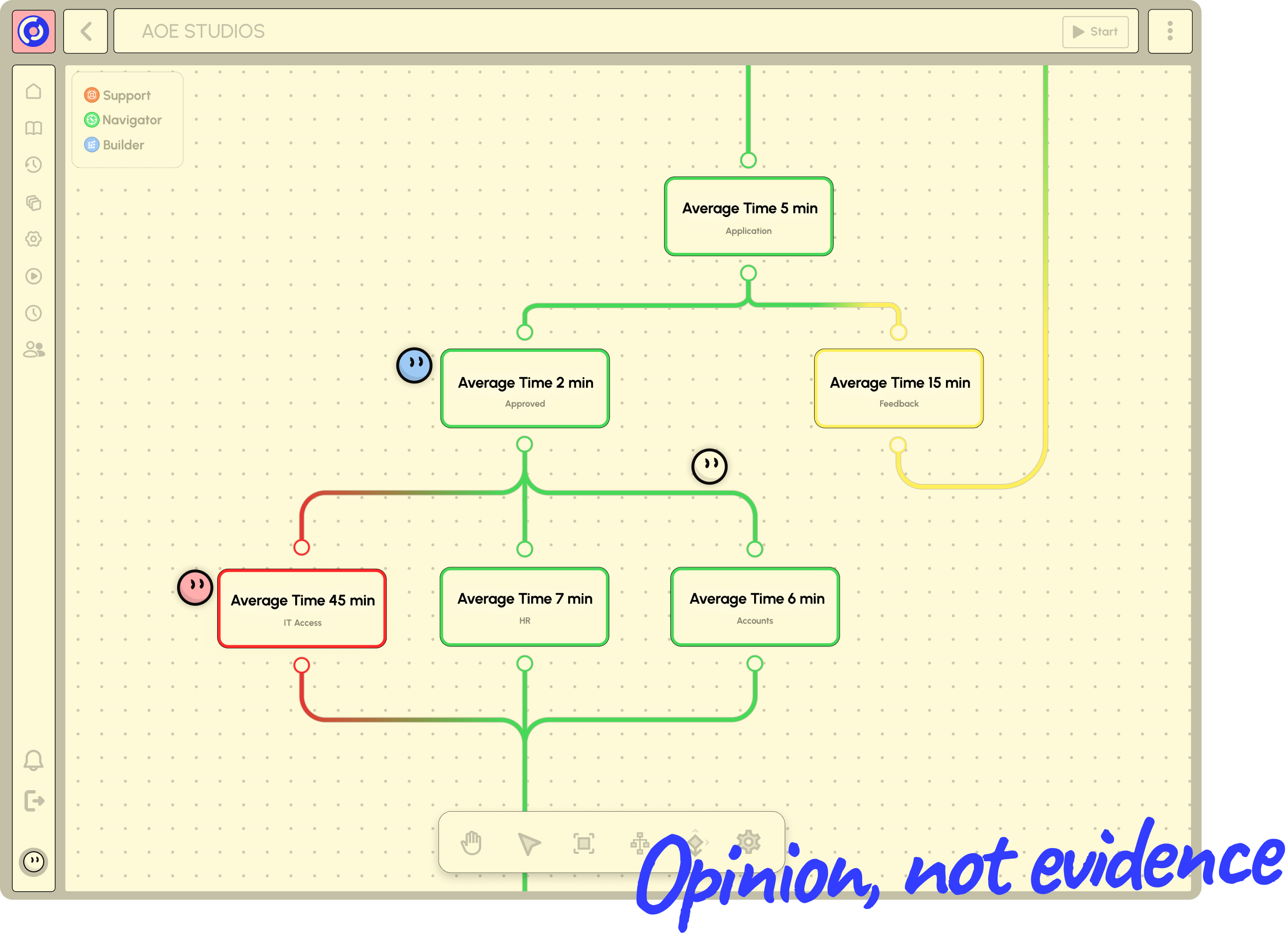
Process improvement usually starts with a gut feeling and ends with a debate. Someone thinks onboarding takes too long. Someone else blames the handoff to Legal. Without data from actual runs, improvement is opinion, not evidence. So nothing changes.

04. The improvement loop

See where work stalls, change the map, then measure whether it helped

Because the map, the session, and the record are all connected, Eddy can show where people drop off, where handoffs wait, and which stages take longer than expected. Where is the bottleneck? Where does coordination depend too heavily on one person? Change the map, run the process again, and compare. Improvement becomes a practice, not a debate.

Case by Case

Read how other organisations coordinated their work on Eddy.
The proof is in the process.

University of Gothenburg emblem

University of Gothenburg

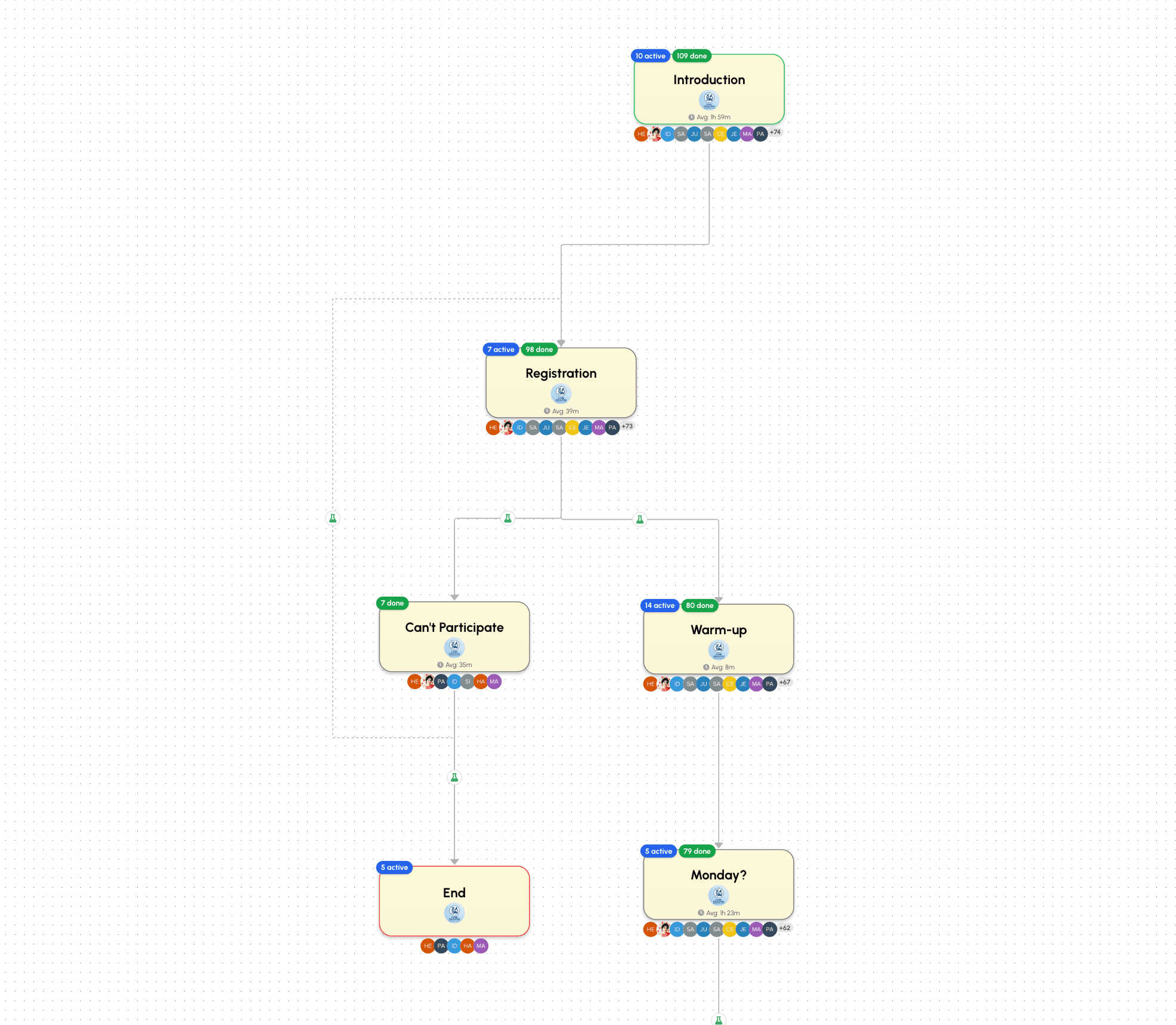
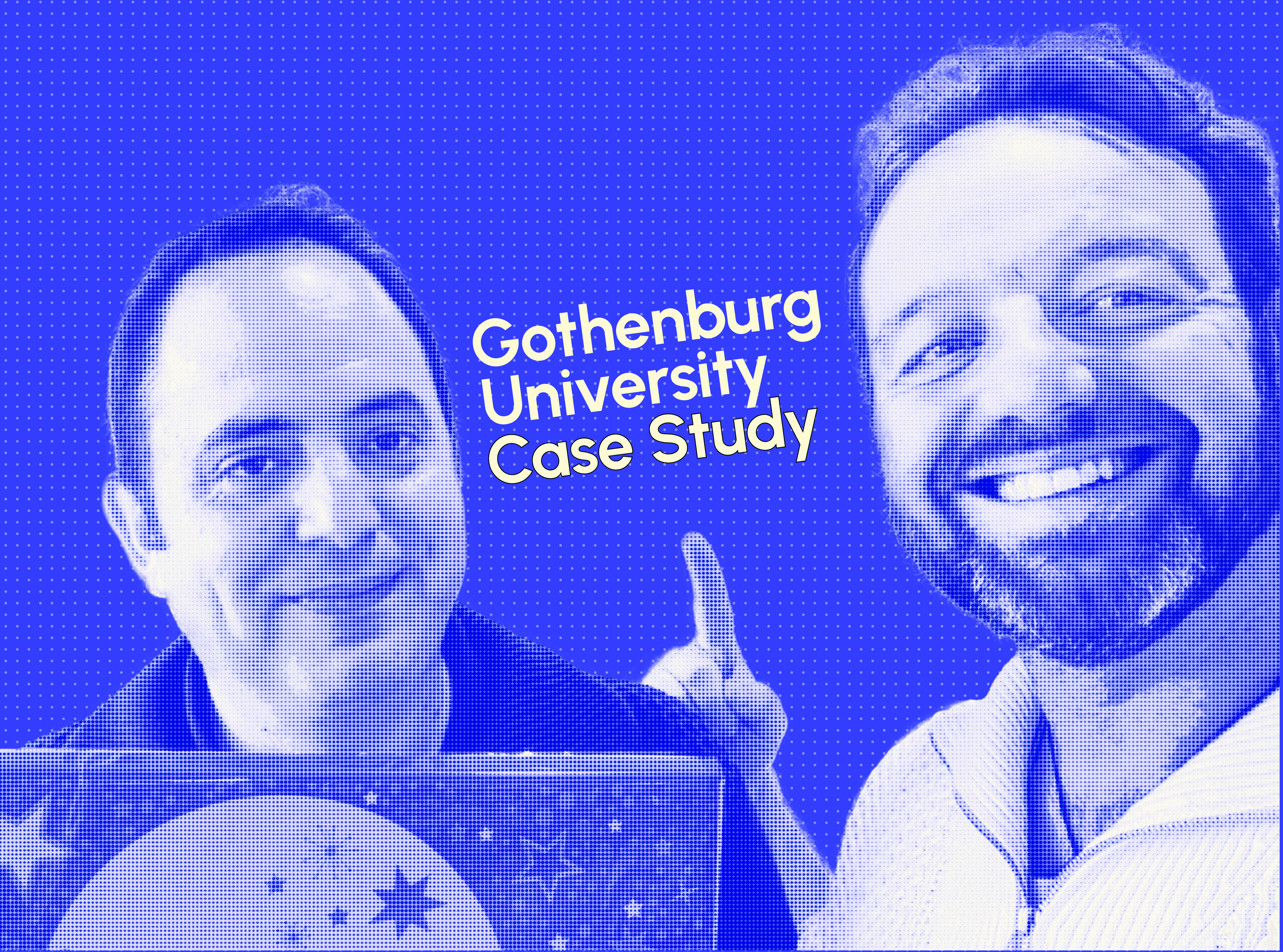
A live annual compliance audit for 145 staff. No rollout training. No new account required. Just a link in an email and a step to complete. What started as one pilot became several processe in different teams exploring new ways of working together.

Luciano — University of Gothenburg case study

Thinking out loud about how organisations work

Learning in public and proving things in use before making larger claims.

Follow The Build

We share what we learn while building Eddy covering coordination, organizational design, process intelligence.

Join The Discord

Want to discuss Eddy with others, get support, share ideas, and hang out with the crew?

OI Whitepaper

The intellectual case for a new operating model one where the process is the structure, the record writes itself, and improvement is a practice not a debate. For investors, institutional buyers, and serious practitioners.

Explore more paths

Want to explore further?